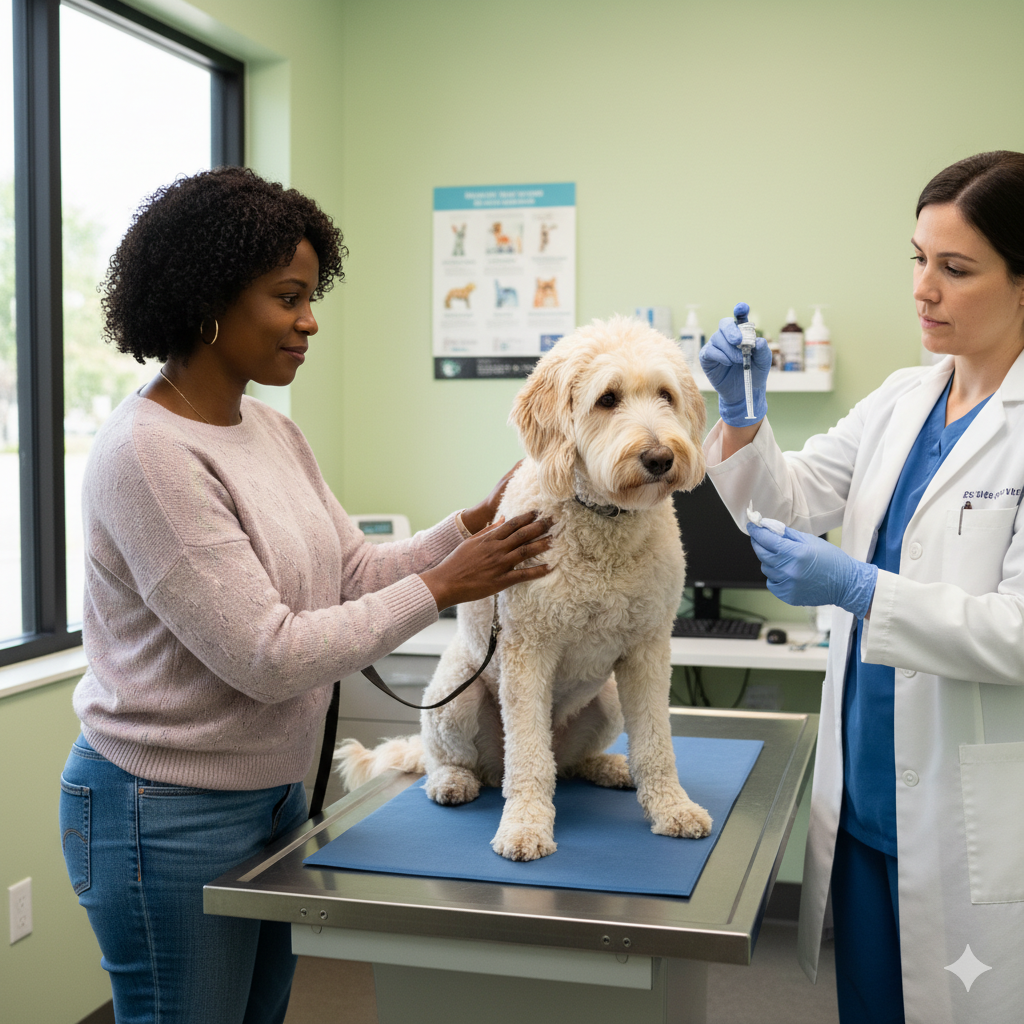
Create one reference entry for the treatment
Use the animal’s name at the top of the record and keep the current instructions beside it. Avoid combining details from two animals on one page. If a new instruction replaces an old one, date the change and make clear which version is current.
Before leaving the clinic, ask the vet to explain unclear directions, how to use any measuring device and what to do if a dose is missed. The FDA’s consumer guidance below explains why those questions matter.
Build a record you can actually use
Copy treatment information from the veterinary instructions rather than relying on a message recalled from memory. If a field is unclear, ask for clarification.
- Pet’s name and the medicine’s full name.
- Exact prescribed instructions and a copy of their source.
- Start date, review date or end date when specified.
- Planned care time, kept separate from actual administration time.
- Who completed the task and when.
- Questions or observations to discuss with the clinic.
Agree how caregivers hand over
Choose one place for the current instructions and one place for completed-care updates. A calendar entry or a message saying “I will do it” is a plan. Agree that the person who has finished the task records the actual time and identifies themselves.
For example, “Alex will give the evening medicine” does not confirm administration. “Alex: given at the recorded time” describes completed care. Agree on clear wording so a plan cannot be confused with completed care.
Prepare a question instead of improvising
If the record is uncertain, note what you know and contact the veterinary team for guidance. Do not use this article to decide whether to repeat a dose, change a quantity or stop treatment.
Keep notes factual: what you observed, when you observed it and what was recorded. If you suspect a medication error or reaction, contact the vet promptly. Do not wait to tidy the record before seeking help.
Bring a useful summary to the next appointment
Keep a dated list of current medicines and any questions so the appointment does not depend on memory. Retain older instructions as history while making the current version easy to recognise.
PETsperity lets you organise dated care notes and treatment information in your pet’s history. Check the features and limits of your plan, and verify any reminder you rely on. Keep the original prescription or label available as the reference.
Your questions answered
What should I do if I miss a dose?
Follow the instructions supplied by your veterinarian or contact the clinic. There is no single catch-up rule appropriate for every medicine or animal; this guide does not provide one.
Does a reminder mean the medicine was administered?
No. A reminder indicates a planned task. Record completed care separately and agree how everyone involved checks the latest information.
Can I reuse another pet’s treatment plan?
Do not assume that another animal’s instructions apply. Ask the veterinarian responsible for the animal, including when the species differs.